Blog home / Schengen Visa Tips: Don’t get caught out at the border
Schengen Visa Advice: Two important tips to remember
Europe’s always been a progressive part of the world. Way back in 1985 an agreement was struck near the town of Schengen in Luxembourg, creatively named the Schengen Agreement.
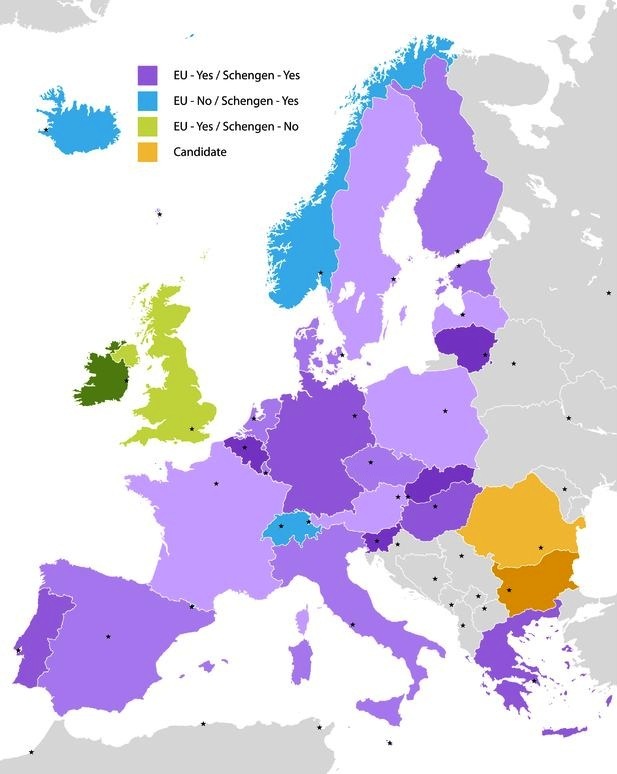 Current Schengen countries
This agreement led to the creation of a special zone, named the Schengen Area, where border policies were relaxed and free movement, without the need for any immigration controls and passports, was allowed for the citizens of the countries signed up to the Schengen Agreement.
Relaxed. Free movement. Don’t let all these words confuse you, there are still some very important things to remember about the Schengen Area to ensure that your next trip goes smoothly.
First, don’t mistake the Schengen Area for the European Union. The Schengen agreement doesn’t mean you can waltz into any country in the EU without being checked at the border. Currently, there are 26 countries that have signed up to the Schengen Agreement, 22 of which are part of the EU and the remaining 4 part of the European Free Trade Agreement (EFTA).
The countries outside the Schengen Area in Europe where UTracks offer active holidays include the UK, Ireland, Croatia, Turkey, Montenegro, Albania, Bosnia-Herzegovina, Serbia, Romania and Bulgaria. For the full list of current Schengen countries,
click here.
Secondly, for many non Schengen country passport holders, such as Australian’s, Canadian's, and United State's you can only spend 90 days in the Schengen Area within a 180 day period. Careful planning is required for visits longer than 90 days. In certain circumstances it may be possible to apply for a long stay visa in a Schengen area country, for example if you are studying or have relatives in the country.
Even if you think you are sure it never hurts to double check your visa information with the relevant embassy in your home country - you don't want to get caught out on your holiday.