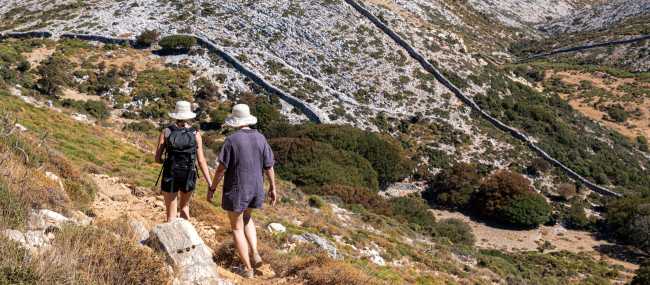
Take in the stunning views from Mt.Zas (Zeus).
Blog home / Exploring Santorini & Naxos on Foot
Exploring Santorini & Naxos on Foot
Follow her journey through Greece as she hikes ancient trails, tastes local olive oil, and discovers that gyros taste even better after a long day’s walk.
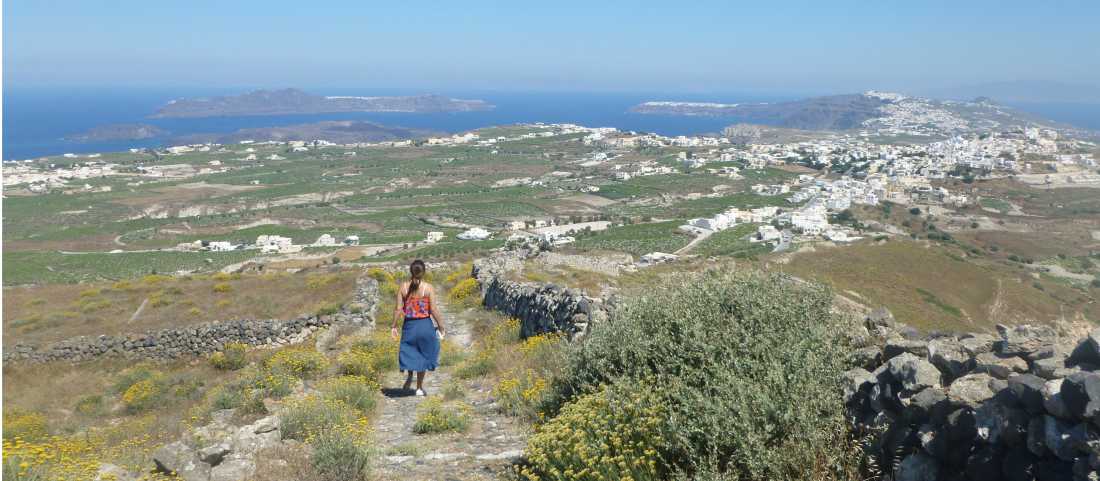
I arrived in Santorini from Canada a little jet-lagged and very ready for fresh air. The ferry into the caldera is as dramatic as everyone says, but the practical bits mattered too: we printed our Blue Star tickets at the kiosk by the port and found seats inside with coffee and a view. A few hours later we were stepping off in Naxos, bags in hand, and walking up to a small family-run hotel near the port.
Chalki was our first starting point and set the tone beautifully. The trail wove between olive groves that have stood for over a thousand years. Old cobbled paths linked tiny stone chapels, farmhouses and marble ruins. A detour led us to the half-finished Kouros statues - 2,800 years old and still lying gracefully where they fell. It’s the kind of moment that reminds you how deep history runs here. Friendly locals offered a friendly “kaliméra”, and free range chickens wandered through lanes like they own it.
Another favourite walk began near Kynidaros and descended through marble country to the green valley of Eggares. It was mostly downhill with a quick change from quarry country to green valley. The Eggares Olive Press Museum is worth the stop: a short, friendly tour and tastings that made us rethink olive oil (orange-infused over ice cream is a thing, and it’s good). The lemony scent of olive wood lingered long after we left.
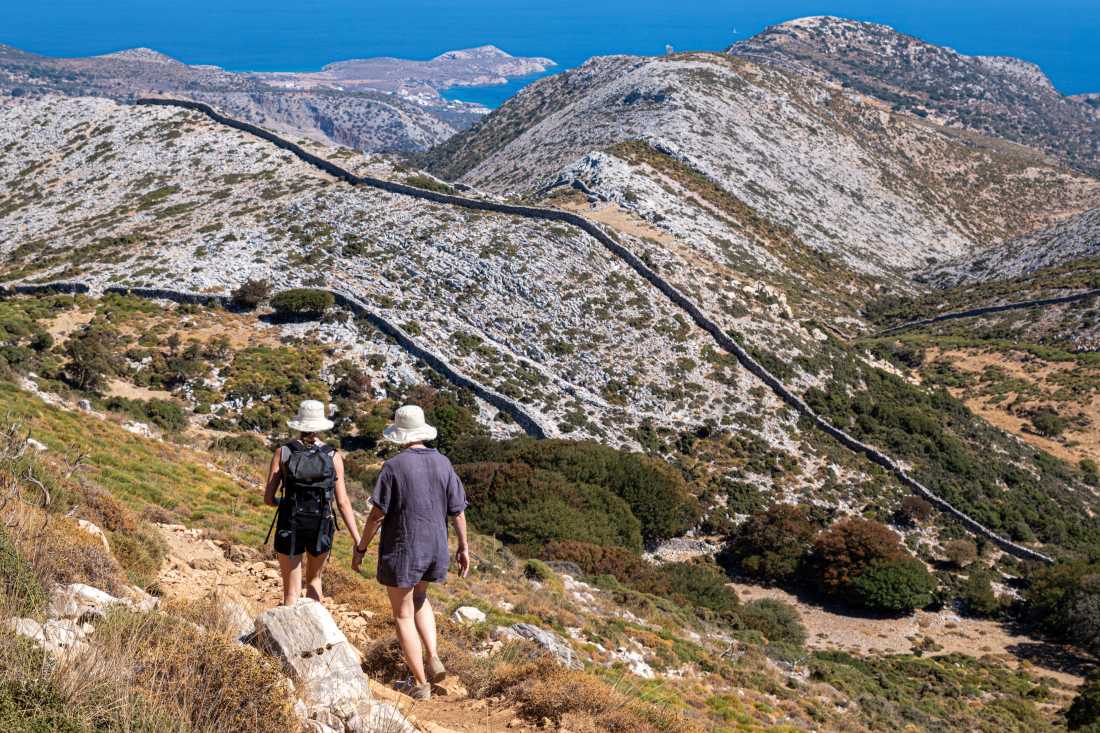
The ascent of Mt Zas, the highest peak in the Cyclades, was the most rewarding challenge. From the village of Filoti, a well-marked trail climbs steadily up the slopes where, legend has it, Zeus was nursed in a cave. The views from the top were astonishing - the blue sweep of the Aegean dotted with distant islands, the patchwork of olive groves far below. After the climb, a cool drink in a shaded taverna in Apiranthos felt well earned.
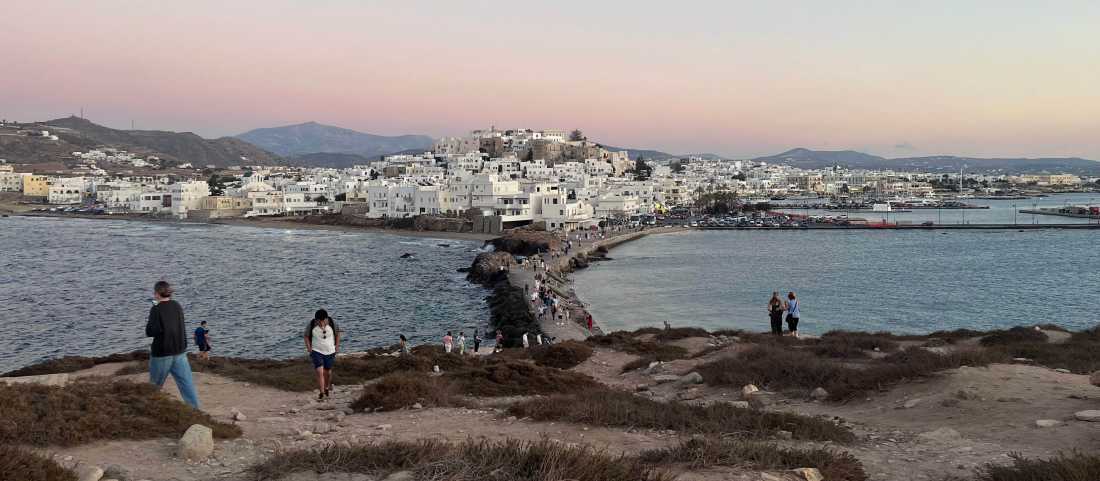
Evenings on Naxos were simple: a swim at Agios Georgios, sunset by the Portara, and easy dinners. We liked a no-frills pita souvlaki spot (so much we went twice). B
Santorini is a world apart. The cliffs and villages feel sculpted by fire and light, and the walking trails are some of the most striking in all of Greece. From Akrotiri, we followed a gentle caldera-edge path where the sea glittered below and the scent of wild herbs filled the air. Later, we explored the Bronze Age ruins at Akrotiri, where volcanic ash preserved streets, walls and pottery from 3,500 years ago.
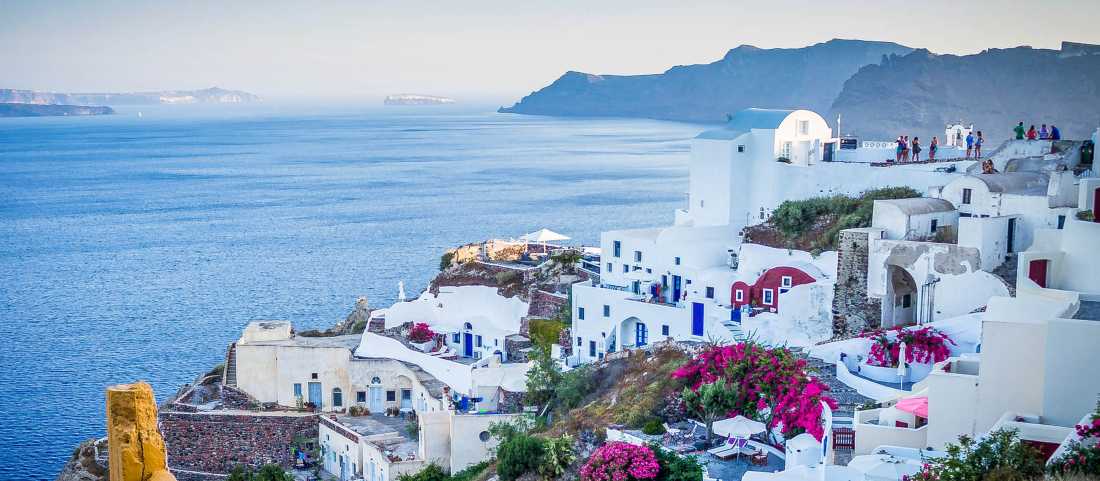
Another favourite route climbed from the coast at Perissa to the old hilltop capital of Thira. Standing among the ruins with the sea on both sides, it was easy to imagine ancient traders watching the same horizon. From there, quiet vineyard paths led past Pyrgos and Emporio before looping back toward the coast.
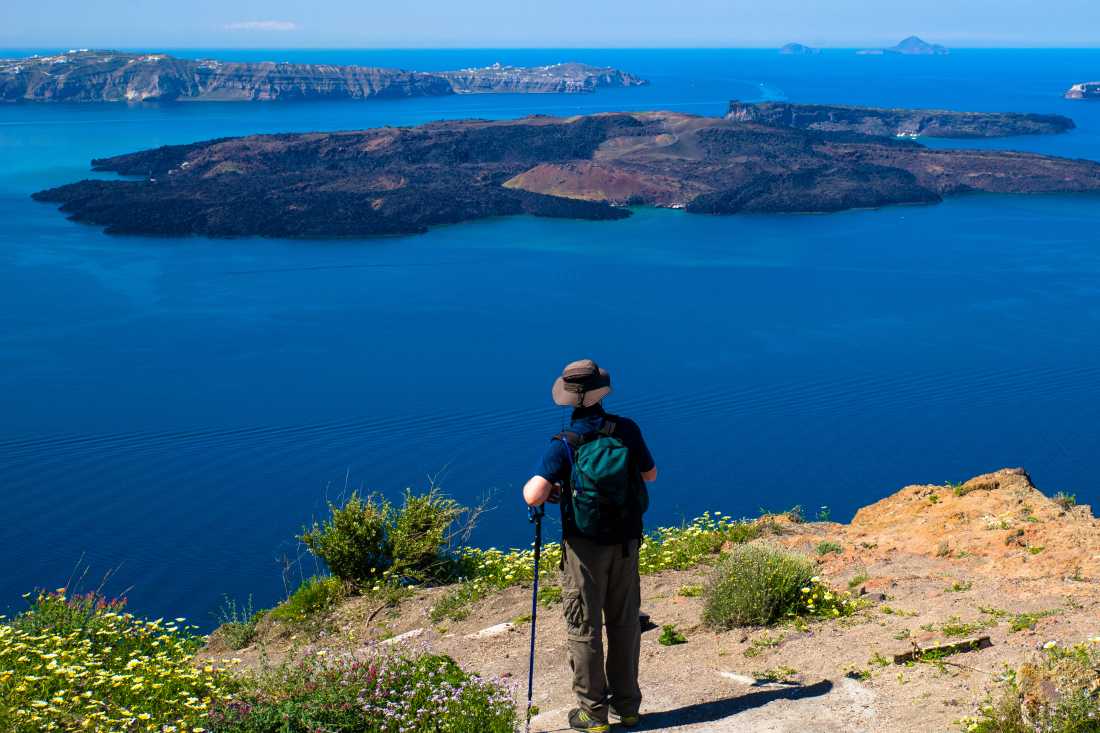
The walk from Fira to Oia is the one that lingers most. It follows the caldera rim, winding through whitewashed villages, blue-domed churches and stretches of quiet path where the only sound is wind and footsteps. The views change constantly - cliffs dropping into the lagoon, distant islands shimmering, and, finally, the sunset over Oia that everyone tells you about (and they’re right).
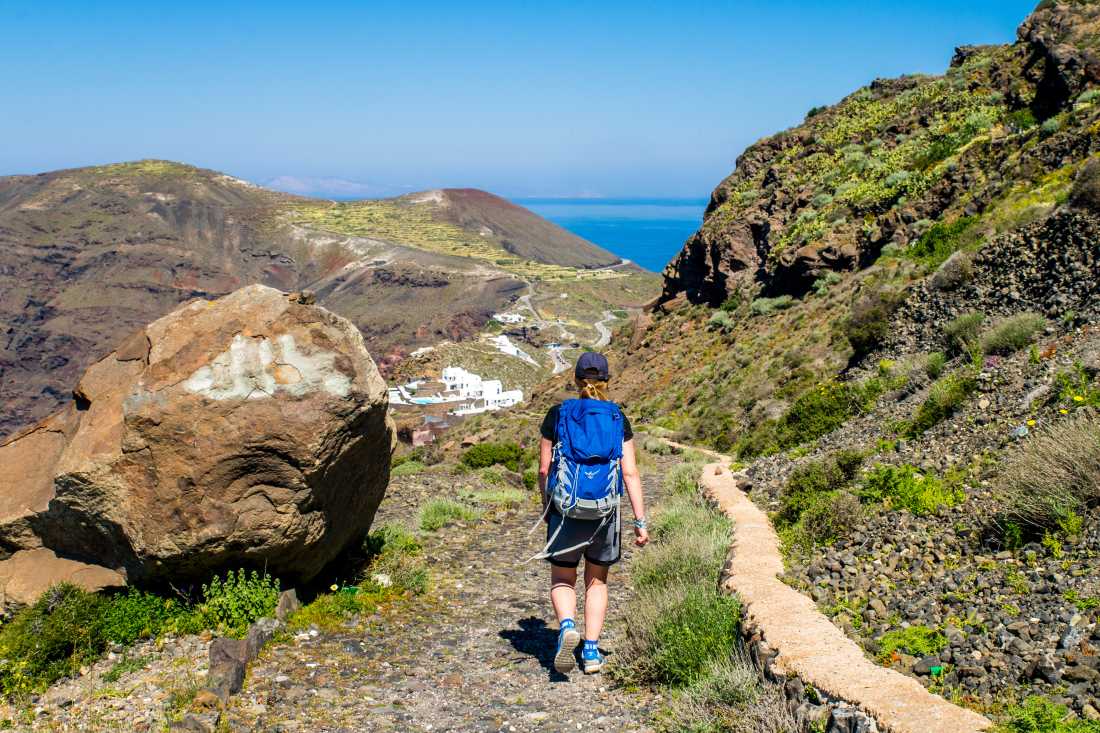
Two islands, two personalities. Naxos gives you olive valleys, village squares and the effort-meets-reward of Mt Zas. Santorini brings caldera drama, Bronze Age streets paused in time, and that cliff-top traverse you’ll think about for weeks. Ferries and local buses slot the days together; the navigation app and notes do the rest. Grading says “introductory to moderate,” which matched our experience: enough challenge to feel proud, plenty of time for swims, cafés and sunsets.
It’s not a “flop and drop” holiday. It’s better: real walks, real people, and swapping stories over grapes drizzled with orange-infused olive oil. We came home a little sun-kissed, a bit footsore, and very happy.
Explore Greece