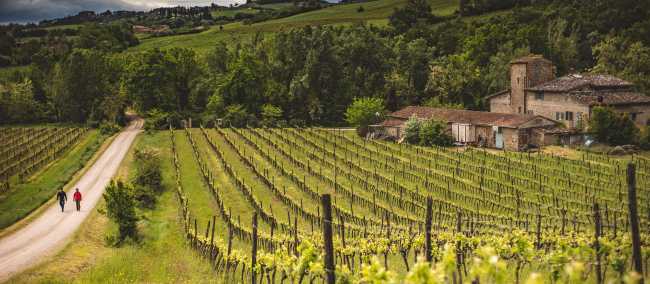
Walkers take in the typical Tuscan landscape on the Via Francigena | Tim Charody
Blog home / Elle walks 500km of the Via Francigena Pilgrimage
Via Francigena: I survived a 500km pilgrimage in Italy
When travel writer Elle Halliwell set out to walk 500 kilometres along Italy’s Via Francigena, she knew it would be a challenge. What she may not have expected was how quickly the experience would strip travel back to its essentials.
In her recent Escape article, Elle shares what it is really like to commit to a long-distance pilgrimage in a country better known for leisurely lunches and high-speed trains. There are early mornings, sore muscles and moments of doubt. There are also sweeping Tuscan views, medieval towns rising from hilltops and the steady satisfaction that comes from covering ground on foot.
It is not a glossy highlight reel. It is an honest account of what happens when you slow down and let a landscape unfold at walking pace.
If you are curious about what 500 kilometres through Italy does to your legs and your mindset, her story is well worth the read - Read Elle's Story Here
More than a headline number
Five hundred kilometres sounds extreme. In reality, the Via Francigena is designed to be walked in stages, and that is part of its appeal.
The route stretches from Canterbury in England to Rome, tracing a path that medieval pilgrims once followed to reach the Vatican. Today, many walkers choose to tackle a section rather than the entire distance. The Tuscan stages are among the most popular, and for good reason.
Here, the trail links vineyard-covered hills, cypress-lined ridges and historic towns such as San Gimignano and Siena. The walking is varied but achievable, with a mix of rural tracks, farm roads and quiet lanes. Days are structured around a simple routine: breakfast, walk, pause for coffee, walk again, arrive, eat well, sleep.
It is demanding enough to feel like an accomplishment, but not so extreme that it is out of reach for regular walkers with a reasonable level of fitness.
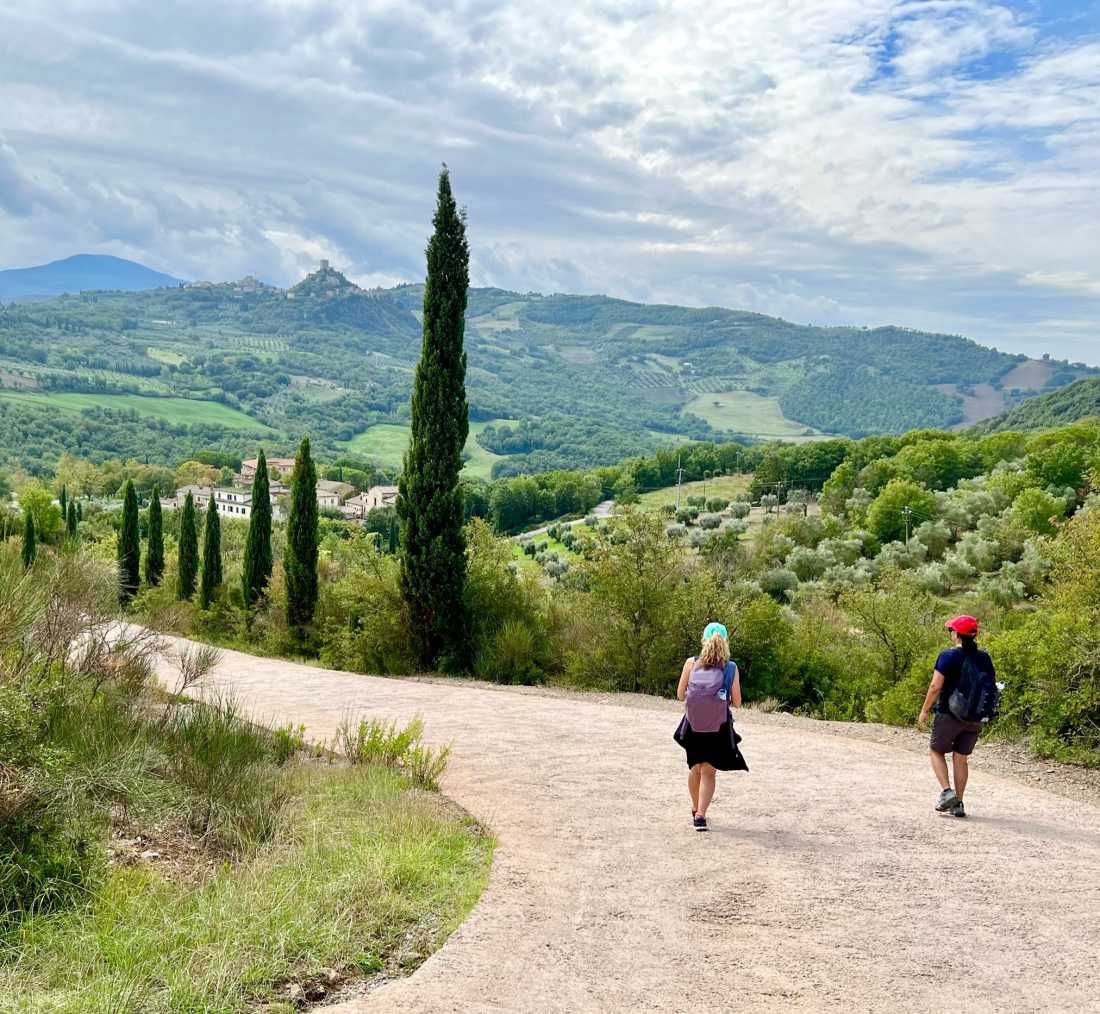
Walking with support
Elle’s experience highlights both the physical challenge and the reward of committing to a multi-day journey on foot. For many travellers, the question is not whether they could do it, but how to make it practical.
That is where a supported self-guided trip can make all the difference.
UTracks offers a range of Via Francigena itineraries, including some of the most scenic sections through Tuscany. Accommodation is pre-booked in small hotels and guesthouses, luggage is transferred between towns and detailed route notes guide you from one stage to the next. You walk with a daypack, not a full load.
This approach keeps the focus on the experience itself. You still earn every kilometre, but without the stress of organising logistics along the way.
Why this route resonates
The Via Francigena is quieter than some of Europe’s more famous pilgrimage routes. It feels less crowded, more local. You move through working farms, small villages and historic centres that have welcomed travellers for centuries.
Walking it is not about racing to Rome. It is about committing to a pace that allows you to notice the details: the shift in light across a valley, the sound of church bells at midday, the satisfaction of arriving in a new town under your own steam.
Elle’s 500 kilometre journey captures that reality. It is tough at times, but deeply rewarding.
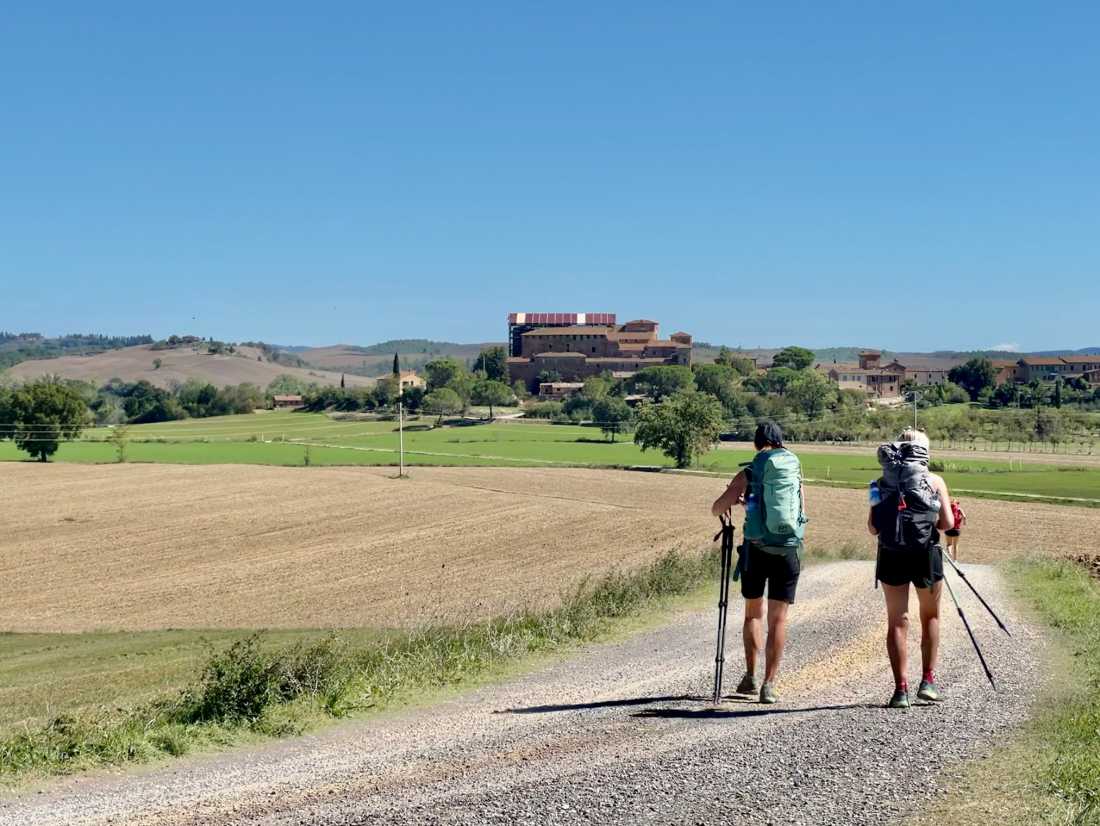
If her story sparks something in you, the Via Francigena is not just a headline. It is a route you can experience yourself, one stage at a time, with the right support in place.
>> View all Via Francigena Trips