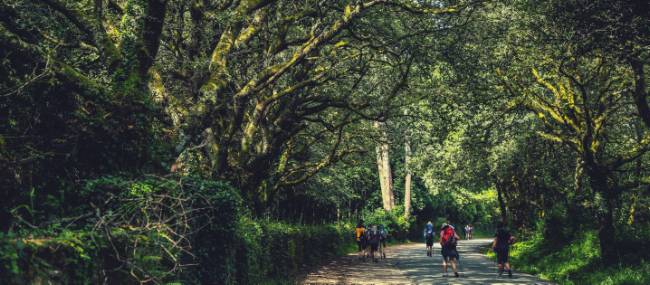
Walking along the Camino de Santiago trail in Galicia | @timcharody
Blog home / Discover Galicia: Beyond The Way Of St James
Discover Galicia: Beyond The Way Of St James
Top sights, activities and cuisine of Galicia
Pilgrims who have walked the
Camino de Santiago are familiar with the last region of this journey:
Galicia. In this article from the Board of Galicia, we learn about the unmissable sights, foods, and activities of Galicia that aren't necessarily limited to the Camino trail.
Importance of the Camino to Galicia and Europe
Since the Middle Ages, pilgrims have flocked to Galicia from throughout Europe, drawn by the challenge of reaching the end of the Way of Saint James and the end of the known world, which until the Renaissance was considered to be
Finisterre, situated on the Galician coast and one of the Continent’s westernmost points.
Even before the idea of Europe was born, the Way of Saint James was laying the foundations thanks to the exchange of knowledge and culture that flowed throughout the West and converged at Compostela, creating a cultural and social network that sowed the seeds of the sense of the European identity and awareness that exists today.
The Way of Saint James still preserves a cultural and cosmopolitan splendour that has been built up over the centuries; indeed, the medieval pilgrimage route that forged the foundations of modern Europe continues to draw thousands of people each year. Modern-day pilgrims - regardless of the personal or collective reasons that have spurred them on their way from far-flung corners of the world towards the end of the trail in Santiago de Compostela - all agree that the Way is truly universal.
Galicia's Geography
Galicia is mainland Spain’s most Atlantic region. Looking out onto the ocean, its more than 1,300 kilometres of coastline are dotted with over 700 beaches, many of them completely deserted. Its breathtakingly beautiful and varied coasts boast the highest cliffs in Europe, which contrast with the calm waters of its tidal estuaries, navigable 365 days a year.
The Galician coast is also home to the Islas Atlánticas de Galicia National Land and Sea Park. Together with the nature parks at the mouth of the River Umia and the Corrubedo Sand Dunes, this natural treasure reflects the spectacular land and seascapes that can be admired all along the coastline.
Galicia is Spain’s greenest corner. Inland, more than a thousand small rivers twist and turn their way through rolling mountains and valleys that are also home to four nature parks. Exploring inland Galicia and taking advantage of the extensive network of rural tourism accommodation is still an unforgettable adventure.
Top Sights & Activities of Galicia
With a history stretching back more than 2,000 years, Galicia is featured four times on the World Heritage List: the city of Santiago de Compostela, the Way of Saint James, the Roman Walls of Lugo - the best conserved example of their kind in the world -, and the Tower of Hercules, the world's oldest working lighthouse, in the city of A Coruña.
Galicia boasts seven cities: A Coruña, Santiago de Compostela, Ferrol, Lugo, Ourense, Pontevedra and Vigo. Each different and with a style of its own: Lugo and Ourense are Roman cities; Santiago de Compostela and Pontevedra have been built in stone; A Coruña, welcoming and luminous; Ferrol, modernist; and Vigo, a seafaring port city.
More than 20 spas and over 300 springs make Galicia Spain's leading Health Tourism destination, offering more than 2,500 beds to suit all tastes and pockets.
Galicia's Delicious Cuisine
Galicia is also synonymous with wine tourism and fine foods, especially the shellfish from its tidal estuaries. It also offers a vast range of meats and fish, all with certificates of authenticity. And all this accompanied by the magnificent wines from the region's five designations of origin: Rías Baixas, Ribeiro, Valdeorras, Ribeira Sacra and Monterrei.
There are many ways to explore Galicia.
Have you been to Galicia? What was your experience like? Let us know in the comment section below.