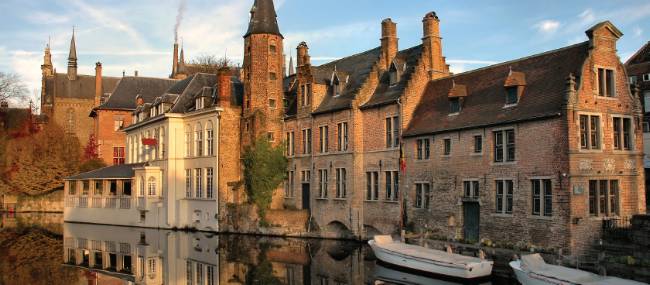
The Belgian city of Bruges
Blog home / A Brief History of Bruges: Belgium's Fairytale Town
A Brief History of Bruges: Belgium's Fairytale Town
The wonderfully charming town of Bruges, in
Belgium, came into popular culture thanks to the hysterically funny film
In Bruges. Released in 2008, this dark comedy starring Colin Farrell and Brendan Gleeson divided those who've seen it into two camps - you either love it or hate it.
Regardless of the movie, you’re going to love the town itself. It’s a quintessential Belgian town with little cobbled roads and bridges and churches and swans and chocolate shops. As they say, it’s like a fairytale.
Bruges is situated in the West Flanders region, which is where they speak Dutch, so it’s odd that they’ve taken the French spelling of the name. Bruges means bridge in Dutch, so you can definitely expect to see a lot of those. 120,000 people live here and it’s a really popular tourist destination, but unfortunately most tourists arrive on coach tours that just stop here for a few hours - it’s worthwhile staying for a night or two to get the true vibe of the place.
Just like
Colin Farrell’s career, Bruges has had some high points and low points. Back in medieval times, during Colin's break out
Phonebooth phase, Bruges was a trade powerhouse as it’s position on the Zwin channel meant all merchants passed through, whether it was Portuguese pepper and spice traders, Basque wool merchants, or Italian ships. By the year 1400, it was believed that some 200,000 people called Bruges their home and it had attracted a number of artists, bankers, weavers, making it a very progressive town.
Then came the decline. The inlet started to silt over and you can’t be a trade port without a working river, and the town’s income shifted away to Antwerp. The population dropped from 200,000 to 50,000, similar to Farrell’s audience numbers for forgettable films such as
SWAT and
Daredevil.
The town was in trouble. Nobody wanted to live in Bruges because there was no money around. The town council sat around thinking, then they looked around and had a realisation. They realised it’s quite beautiful in Bruges! And they succeeded in telling people from all around Europe how beautiful it is and attracted wealthy Brits and French to come and see this fairytale town, making it one of the world’s first tourist destinations in the late 19th century.
Tourism grew from there, with the towns historic centre eventually being awarded UNESCO World Heritage Site status in 2000. It was the European Capital of Culture in 2002 and attracts about 2 million tourists annually. And in 2008 Colin Farrell and Bruges’ popularity trajectories met with the release of
In Bruges.
>> UTracks offer a comprehensive range of cycling tours in Belgium that include a visit to Bruges. Whether it's a guided or self guided cycling trip, or a bike and boat holiday you're after, you'll find an unforgettable tour with UTracks.
Have you walked or cycled the cobblestone streets of Bruges? Let us know in the comment section below!